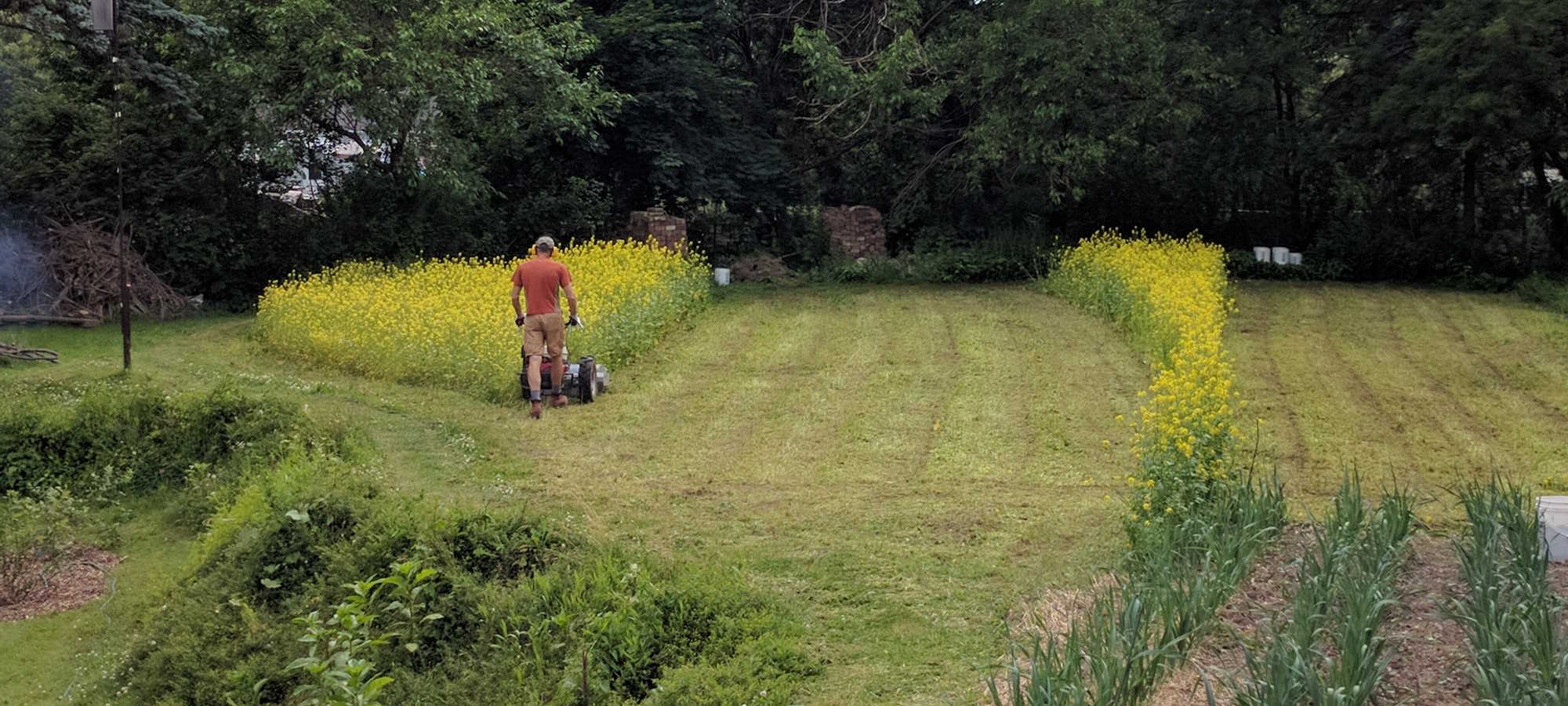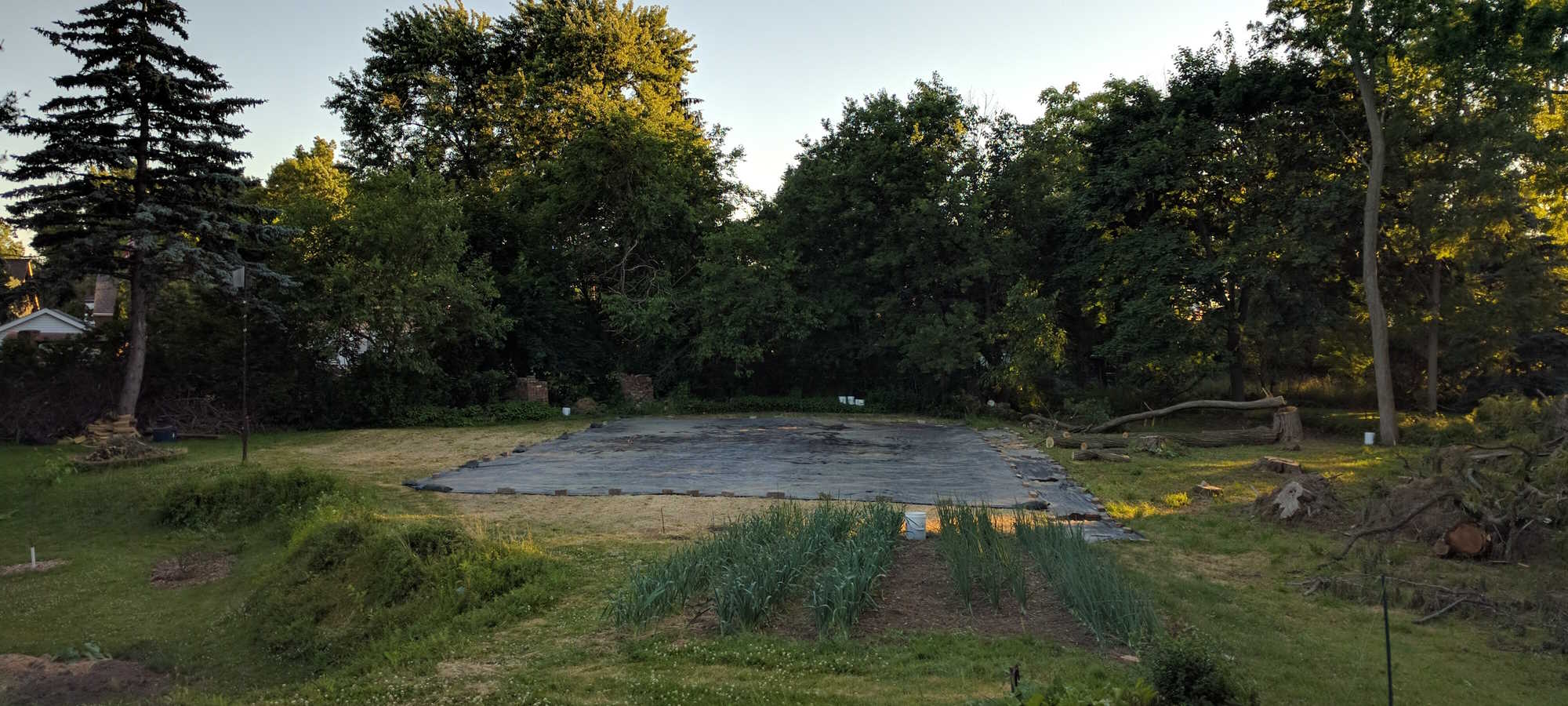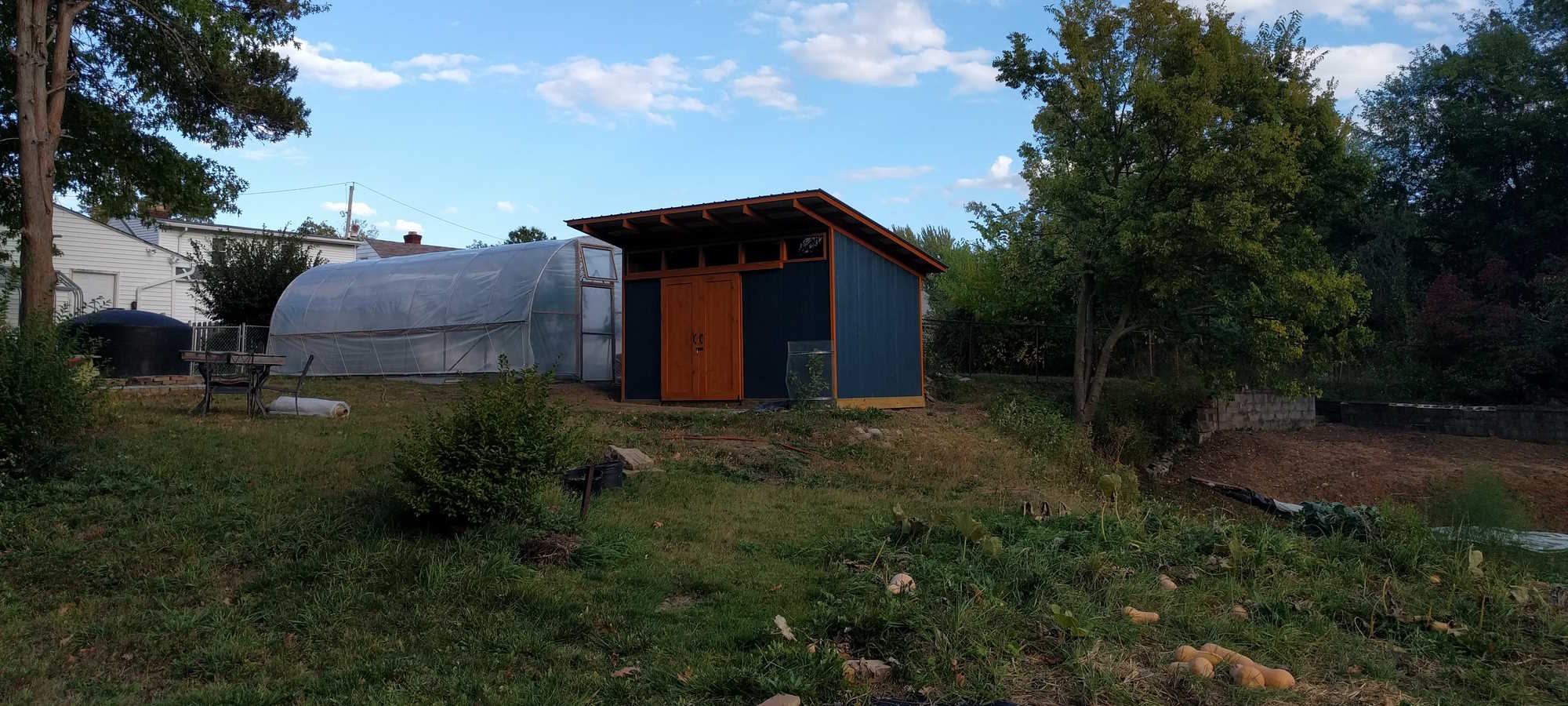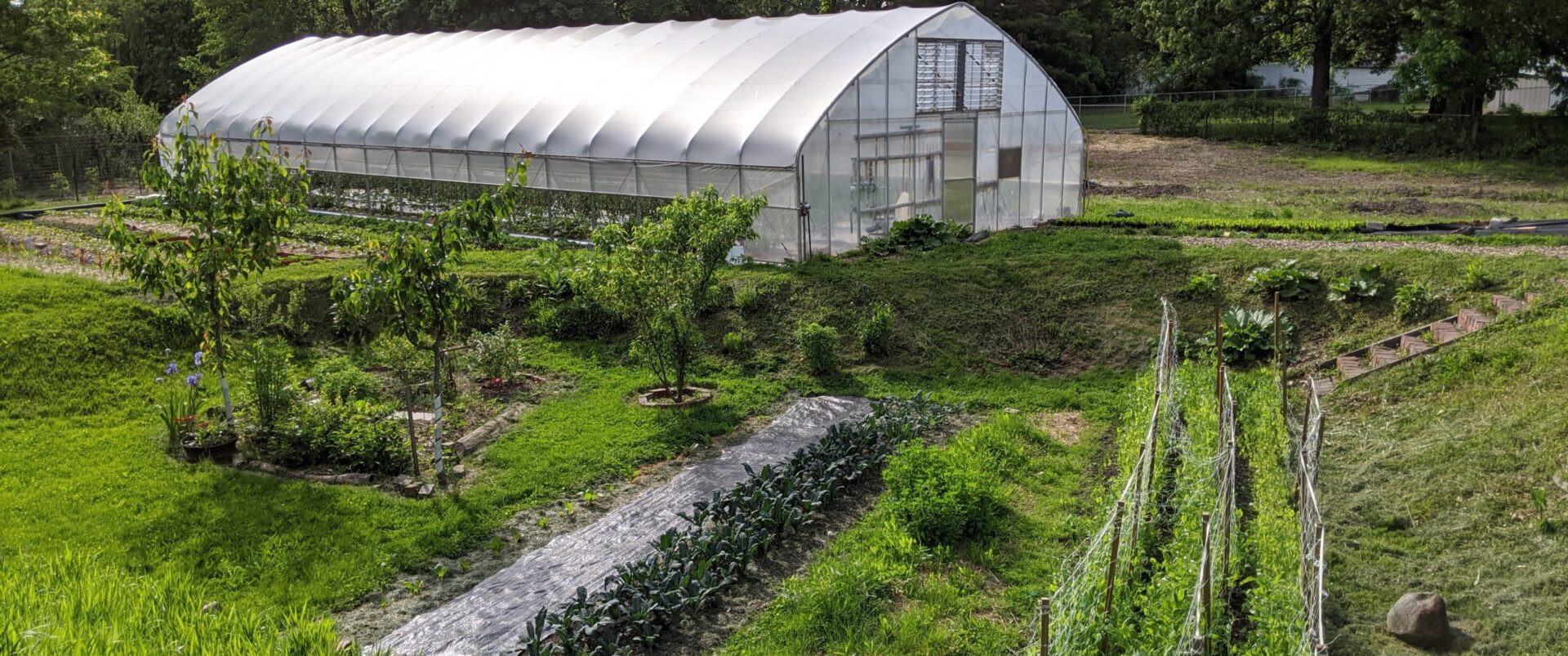
Aerial View of the Farm
First Harvest!
Farm Update – 1 Month Later
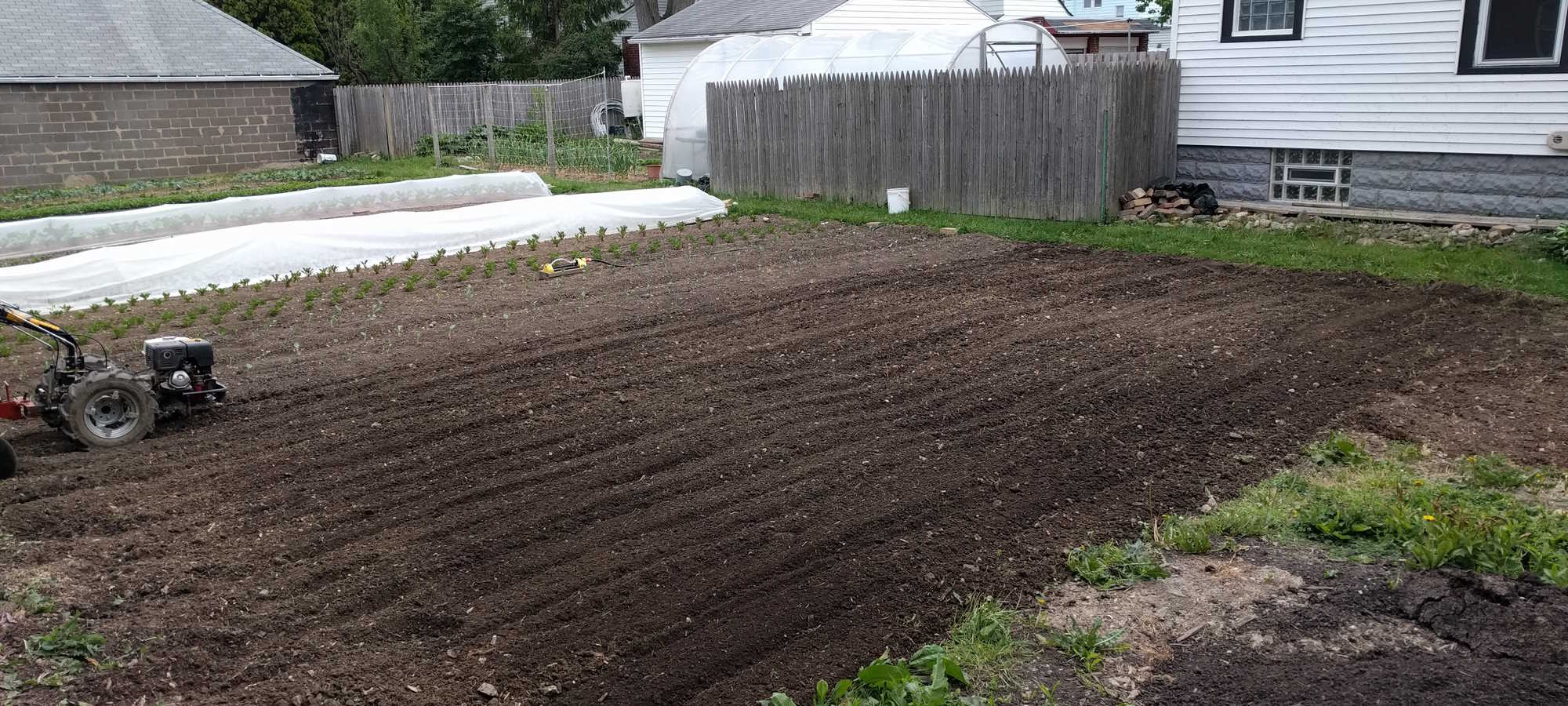
We started prepping and planting on April 2nd. It’s now a month later and we are still standing, though weary with fatigue and rough, calloused hands. The hard work has resulted in 20 beds (30′ x 25″) planted using the SPIN method. There is also an area of onions and potatoes that has been planted and will tie up that area of the farm for quite some time. We still have concern about our soil….lots of clay and still many rocks in the ground.
Can plants grow in clay and gravel? I guess we will find out! Despite this, the rows appear to be growing. A few more days like today and the veggies should thrive! Almost two months until our first market, so we will need to find other buyers in the interim. Interested? Check out our CSA!
Veggie Update
Check out how things are growing at the farm! Since the beginning of April, we have managed to get 15 beds (30′ x 25″) prepped, composted, tilled and seeded. In addition, we’ve put in a few additional beds of potatoes and onions. Things are growing nicely so far.
Bay Branch Launches CSA
We recently launched our modified CSA program. And, also learned that we are going to be selling at the Lakewood Farmer’s Market starting June 26th. With 12 beds planted and garlic coming up nicely, we feel like we are on the right track and are excited to harvest in a few weeks.
Crooked River Coffee – Yaya Carrots
Being big fans of the Tiny Farm Blog, we are now trying one of his tried and true methods of carrot germination – the burlap method. We got burlap sacks from our friend at Crooked River Coffee, a local roaster in the area. We are excited to see how this method works. Basically, the burlap helps keep the soil warm and moist, while suppressing weed growth. As soon as we see the carrots begin to germinate, we’ll remove the burlap sacks. We’ve laid out the burlap end to end and used landscape staples to hold it in place. The other beds contain greens and other vegetable crops. Will post an update soon with results!
Jang Seeder
Last year we purchased a Jang Clean Seeder for planting rows of veggies. The past 2 weekends we have used the seeder and wanted to share an update of how it works. Since, we are still awaiting germination on most of the plants, we cannot comment too much on its precision in terms of the number of seeds it plants. However, we have deciphered the gears to use and the planting wheels to use for each of our seeds, which was no easy feat! Hoping to see beautiful rows of veggies any day now (arugula is up, but too small to tell how the rows are going to shape up).
Here is a brief video showing the seeder in action:
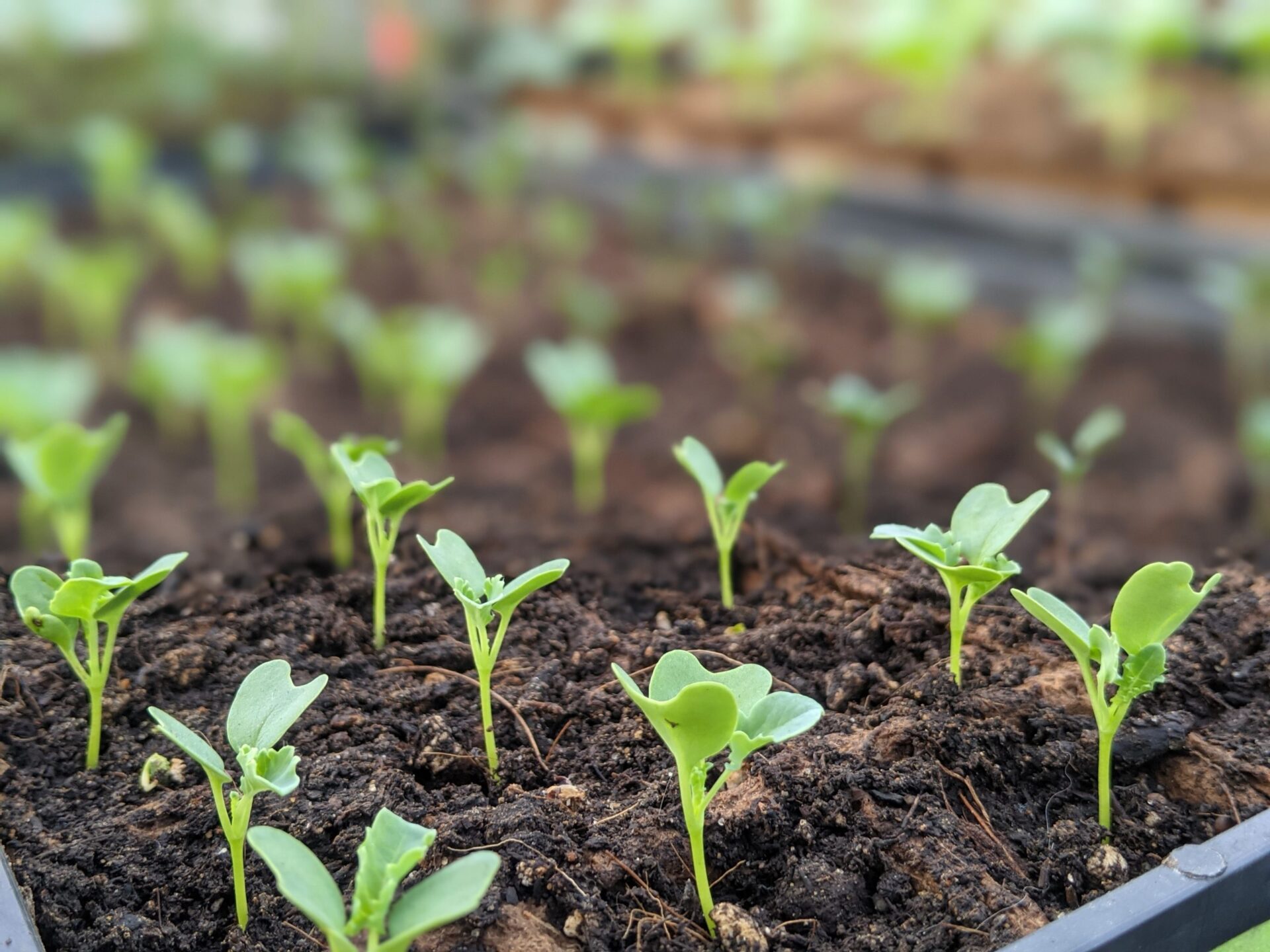
And, one week later, we have plants!
Spring 2010 Update
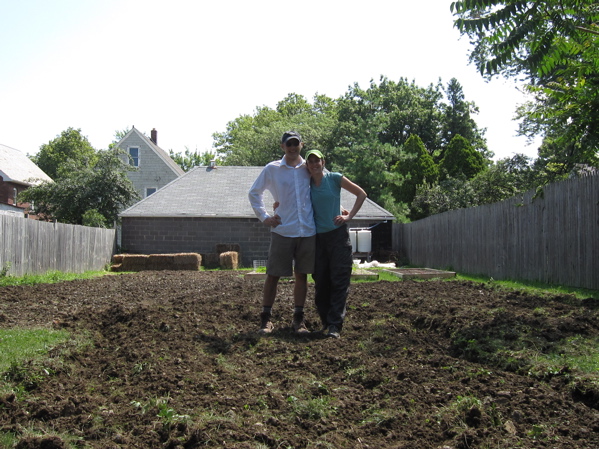
On April 2nd, the temperature reached 87 degrees, a new record. Time to get out in the dirt and start planting! Since this is our first year growing for market, we’ve scaled our growing capacity quite a bit and purchased tools to make the transition a bit easier. This post outlines what we are doing to prepare the beds for planting. This is a bit of a follow on to our post last year about how to prepare an urban lot for planting.
Plow under the cover crop
We really wanted to get more mileage out of the alfalfa we planted last August. However, we are also eager to get some seeds in the ground. So, we used the Grillo 107-d with the Berta rotary plow attachment (“Bertha”) to plow under the cover crop. This will add to the organic material in the soil, but we don’t think we gained much of the nitrogen fixing benefits of the alfalfa since it wasn’t in the ground long enough.
Prep the beds
Next, we prepared our beds according to the SPIN farming method. First, we had to pull some more rocks out of our soil (so many rocks!). Due to the layout of our plot and width of our tiller, we are using 25″ x 30′ beds rather than the 24″ x 25′ recommended by SPIN. We added about 24 cubic feet (or about 4 wheelbarrows full) of compost to each 30′ bed. Then we switched out the rotary plow implement with the Grillo rototiller attachment and tilled the compost into the soil. We set the tiller at a depth of about 4″. This mixes the organic matter into the bed.
Plant the beds
Once the compost has been added, we are now ready to plant! We ran tests with our Jang Seeder to determine the spacing and the wheels to use for each crop (will do a separate post with pics for this). We planted 5 beds as follows:
- Bed 1: carrots x 3 rows
- Bed 2: onions x 7 rows
- Bed 3: arugula x 6 rows
- Bed 4: romaine lettuce x 6 rows
- Bed 5: radishes x 6 rows
Will post an update once we see germination! Happy Spring and enjoy working the soil….
10 Yards of Compost!
This weekend we got a delivery of 10 yards of screened leaf humus. On a recommendation from another urban farmer, we got it from Three-Z-Inc. in Valley View. Cost with delivery $287.70 (that’s $22/yard). Our plan is to add this to the soil (about 3 inches to each bed) for organic material. The ultimate goal is to be able to make our own on-farm compost, but we’ll likely have to purchase more in the interim. In fact, we just found some aged horse manure on Craigslist and got about a yard+ of that the other day to further augment our soil.
![IMG_2737[1]](http://baybranch.files.wordpress.com/2010/05/img_27371.jpg?w=700&h=525)