OSU Extension – Market Gardener Training
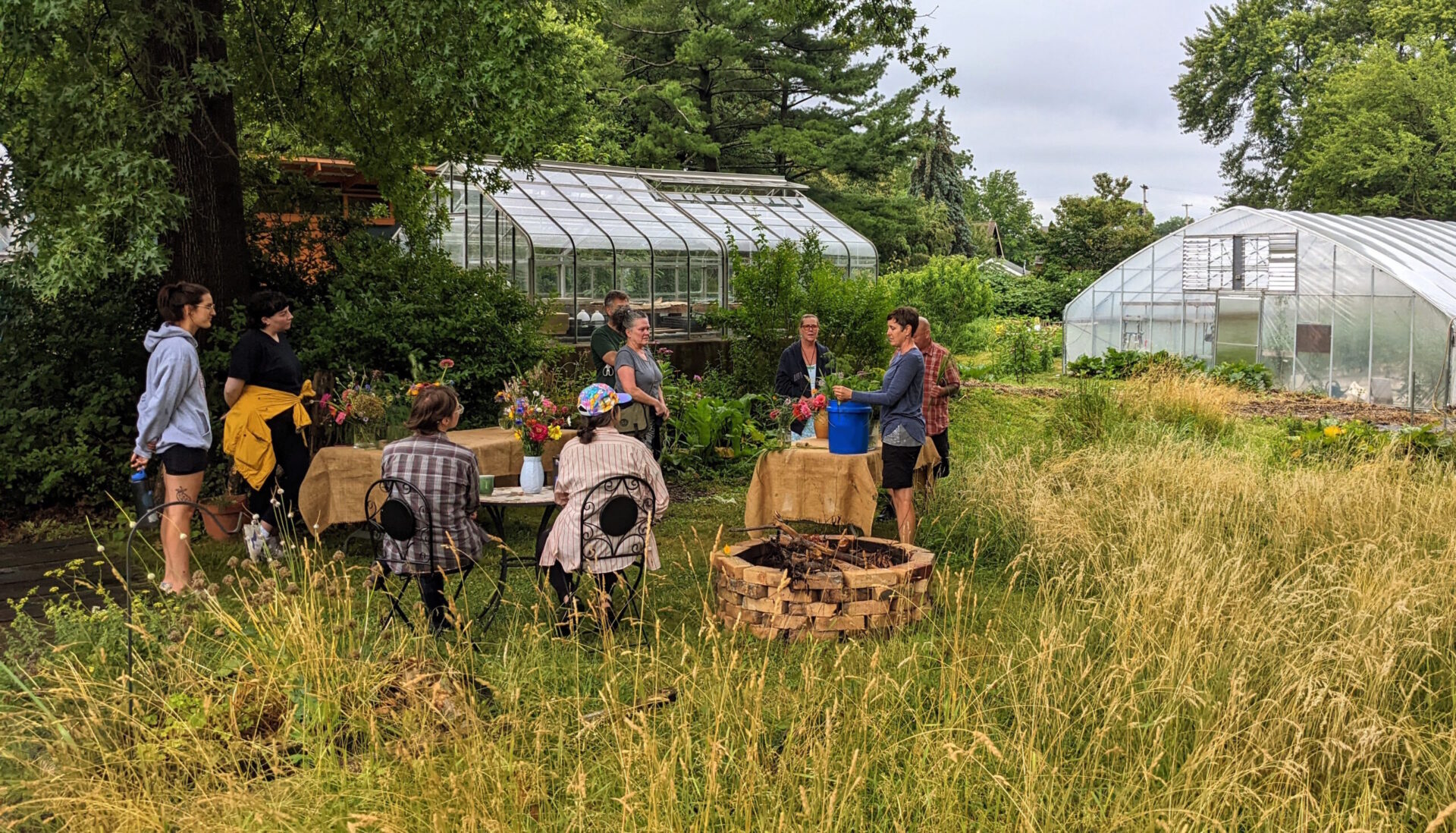
What is the best value in Northeast Ohio for those interested in urban farming? In my opinion, hands down, without a doubt the answer has got to be the 12 week Market Gardener Training Program offered by OSU Extension. Not only do you learn great stuff, such as info about urban soils, business planning, soil fertility, and season extension, but you also get a great deal more, including:
- 2.5 hours of training each week for 12 weeks
- a great network of people with whom to share, engage and collaborate
- soil sample test
- books and handouts to read outside of class
- decent food during breaks
- guest speakers that are the doers on the ground
Morgan Taggart leads the class and is a great resource and facilitator. So glad we are taking this class together….lots to learn and lots of experiments to try this season.
What Does $300 Worth of Johnny’s Seeds Look Like?
Well, just got our seeds from Johnny’s (what we ordered) and here’s what you get for about $300….check it out. A bit concerned about being able to plant all of this….and excited at the same time!
Seeds Ordered!
After pouring over the seed catalogs, we finally have our order in for this season’s market garden. So, whatcha planting??? We based our crops on the highest margin items listed in the SPIN guides. Here’s a list of what we got going on this season and where we got the seeds.
- Arugula
- Astro
- Sylvetta
- Red Cardinal (spinach)
- Emu (spinach)
- Renegade (spinach)
- Tropicana (green leaf lettuce)
- Cherokee (red leaf lettuce)
- Winter Density (green leaf lettuce)
- Buttercrunch (bibb lettuce)
Radishes
- Cherriette
- Easter Egg
- D’Avignon
Beets
- Bull’s Blood
- Touchstone Gold
Carrots
- Scarlet Nantes
- Yaya
Onions
- Deep Purple (bunching scallions)
- Evergreen Hardy White
- Lincoln (bunching leeks)
Onions
- Red Zeppelin
- Lancelot Leeks
- Copra
- Candy Hybrid
- Walla Walla
Potatoes
- Organic German Butterball
- Organic Yukon Gold
- Organic Yellow Finn
Sweet Basil
Birdtown Action Plan
As property owners in Birdtown, we are excited to see a focus on improving the neighborhood so the area can thrive. The Birdtown Action Plan focuses on proposals to improve the quality of life for those in the Birdtown/Madison East region of Lakewood. Originally founded by Union Carbide, Birdtown became home to many who worked for the company. Birdtown is densely populated; about 13,000 citizens live among 7oo dwellings, according to the 2000 census. The plan proposes upgrades to brand the neighborhood, connect people to goods and services within and outside the community, provide a safe and secure place to live, and develop the physical infrastructure for a successful neighborhood. Recommendations are made for commercial, housing, and transportation. Highlights include:
- Upgrades to storefronts and streetscapes
- Public art
- Parking and bike racks
- Access to public transportation
- Community gardens
- Neighborhood watch
Click the image below to download the full plan.
OEFFA Conference Recap
We just got back from the 31st Annual OEFFA Conference in Granville, OH. It was a great weekend of learning from those who have been farming and living low-carbon lifestyles. And, it was a great opportunity to network with others about how to get started (or continue) down this path. Apparently, the conference sold out before the early bird special time period ended! I think I heard about 800 were in attendance. Some brief highlights are outlined below:
Tips for using social networks to market (R. Leeds & Dr. J Fox)
- Get set up on Google Alerts to get an email anytime anything is posted about your business. You can then respond accordingly or just know any buzz about your business online.
- Set up a You Tube Channel and a Facebook Fan Page (fan pages are better than groups b/c they are searchable). Add the links to your website.
Joel Salatin “Everything I Want to do is Illegal”
- Joel Salatin was the keynote speaker on Saturday and his fired up speech left me feeling befuddled by the absurdity of the agriculture laws in this country. Twinkies are food according to the USDA, but fresh vegetables that have been washed by a small family farmer are considered a value-added product so the farmer needs to be licensed. Salatin did provide some alternatives to get through the regs, including opting out of the industrial food system and creating non-commerce ways to trade (i.e. private clubs, CSAs, cow shares/herd shares, and my personal favorite – give your product away for free and ask for donations while explaining the hypocrisy of it all! Check out Joel’s blog for details on this and other related stories.) My favorite part of Joel’s address relates to the idea that “innovation requires embryonic prototypes”. Currently, the regulations are too burdensome for small innovations to occur (i.e. you need a commercial kitchen to produce pickles and salsa, but if you want to do this on a micro scale there is no way to afford the equipment to meet the regulations in order to even get started!) He closed by saying a constitutional amendment guaranteeing freedom of food choice may be in order.
Biodynamics is another principle that was covered during OEFFA. The basic tenet of biodynamics is that the farm is an organism. Diversity of crops and animals leads to stability of the organism and helps to promote and encourage life. Farming in this manner leads to lower yields, but greater returns when you factor in the inputs (fertilizers, tractors) that are used in conventional farming methods. Good resource according to the presenter is The Biodynamic Farm.
We attended this great vermicomposting workshop as well that was facilitated by One20 Farm. Check out their site for some innovative ideas for worm bins. Also liked their tips of using coconut coir blocks for bedding along with some shredded paper. Apparently, this helps keep the whole thing from being too clumpy.
Finally, the last piece I’d like to share is about the sustainable beekeeping workshop we attended. It was facilitated by Christine Tailer of Straight Creek Valley Farm. Though she didn’t get to talking about top bar hives, she did offer lots of advice that would likely make traditional beekeepers cringe. Her session encouraged Spink to order our first set of bees for the warre hive he built a few weeks ago. Will share updates on that once they arrive.
Were you at OEFFA? What did you think?
Local Food Cleveland Connecting Peeps
Tonight, Local Food Cleveland hosted an event, So You Want To Be A Farmer? The panel featured local agricultural experts and local farmers who shared stories with over 200 attendees. Those in the crowd self-identified as interested in becoming farmers, already farming, or just plain wanting to hug farmers for making fresh produce available locally. I have to admit, I put on the farmer sticker, despite still being at the beginning stages of this dream…..I think we’re close enough and was further encouraged by tonight’s event. Here’s a bit of an overview of what happened.
The Panelists
- Morgan Taggart – OSU Extension
- Jessica Levine – Wonder City Farm & Schmidt Family Farm
- Cindy Bischof-Steinbrick – Basil and Beyond
- Darwin Kelsey – The Countryside Conservancy
- Bruce Cormack – Cormack`s Market Garden
Some of the takeaways from the event include:
What is a farmer? When your motivation is profit and you go beyond just growing for home consumption, you are a farmer.
What are some lessons learned? Understand farming is a business. You need to spend a lot of time marketing your business in order to be successful.
How can one get started?
- Get out and dig in the dirt
- Take a course > Exploring the Small Farm Dream
- Set goals – where do you see yourself in 5 years?
- Understand your motivations
- Participate in the “farmer reality show” by talking/volunteering with other farmers
- Understand what you want to market and to whom
- Make a list of what you know and what you need to learn
The event was really encouraging and the advice from the panelists and others that I met is priceless. So glad to be heading down this path…..
Warre Hive Construction
A few years ago we read an article in the magazine Countryside & Small Stock Journal regarding sustainable beekeeping practices using a Warre hive. Since then we’ve read and studied many sources on the Internet regarding sustainable beekeeping, and finally this weekend we were able to construct a Warre hive for ourselves.
I think The Bee Space has done a nice job summarizing what a Warre hive is. There are links to Emile Warré book translated into English, which I would highly recommend reading. I followed their construction guide, but made a few minor modifications, like windows.
One of the great things about our hive is that it’s built with local wood! Other than being totally cheap, which was a huge bonus, our wood was supplied to us by my uncle Gary. He had harvested some wind damaged white pines a few years back and graciously gave the wood to us to use for the hives. Also he planed the wood to 7/8″ thickness cause he’s just totally awesome. The other thing is, when I was a kid, maybe 8 or 9, I played in the stand of trees where this wood came from. The idea that our “food doesn’t come from a grocery store”, occurred to me on another level that “wood doesn’t come from Lowe’s / your big box lumber store”. That this wood came from a real tree, and I don’t get sentimental very often, but I found this idea to be very profound as we were building the hive. I almost got misty.
Here are some pictures of the construction process. We will continue to post regarding our beekeeping progress throughout the season. Also big thanks to my dad for helping out on the construction. I’m blessed with a pretty awesome family.
I couldn’t get my dad to work in the metric system so we ripped the boards 8 1/2″, that’s how tall the boxes are.
I really feel I need to know what’s going on inside the hive, so we fashioned a Plexiglas window on one side of the boxes
We built a total of 5 boxes, 4 with windows and one solid box
We are not quite finished, left on the list is:
- finish the exterior with linseed oil
- install closing latches for the window covers
- decide if we are going to put a wax starter on the top bars
- mount all the top bars
- build a feeder
- find some bees!!!!!
that’s how you know it’s working
it’s a sunny day and only 19F, but our compost pile is really working
over 100F!!!! not quite as hot as we would like, but getting there. that reading from our compost thermometer we got for christmas.
we have been steadily added to the compost piles behind our house and looks like it’s composting in there
1st Farm Conference
Bay Branch Farm recently registered to attend the Ohio Ecological Food and Farm Association’s (OEFFA) annual conference, Growing with Integrity, Eating with Intention. The conference features Joel Salatin as keynote…we’ve read about him (even read some of his books), seen him in several movies about sustainable farming and now we are going to see him live! So exciting.
The other great aspect of this event is that Joel (a different Joel) from Earth Tools is going to be there. As you may recall, Joel sold us our Grillo 107D – now affectionately known as Bertha – last summer. Our latest implement is a rototiller attachment. Specifically, based on Joel’s recommendation, we are getting the 27″ tiller for our Grillo. This will replace the rotary plow attachment and be used for secondary tillage. Since Joel is going to be there and we are going to be there, he’s just going to bring the attachment with him (saving us a trip to KY or shipping costs).
Overall, we are super excited about our first conference and will share our takeaways in a future post. Maybe we’ll see you there!


![IMG_2120[1]](http://baybranch.files.wordpress.com/2010/02/img_21201.jpg?w=700&h=525)